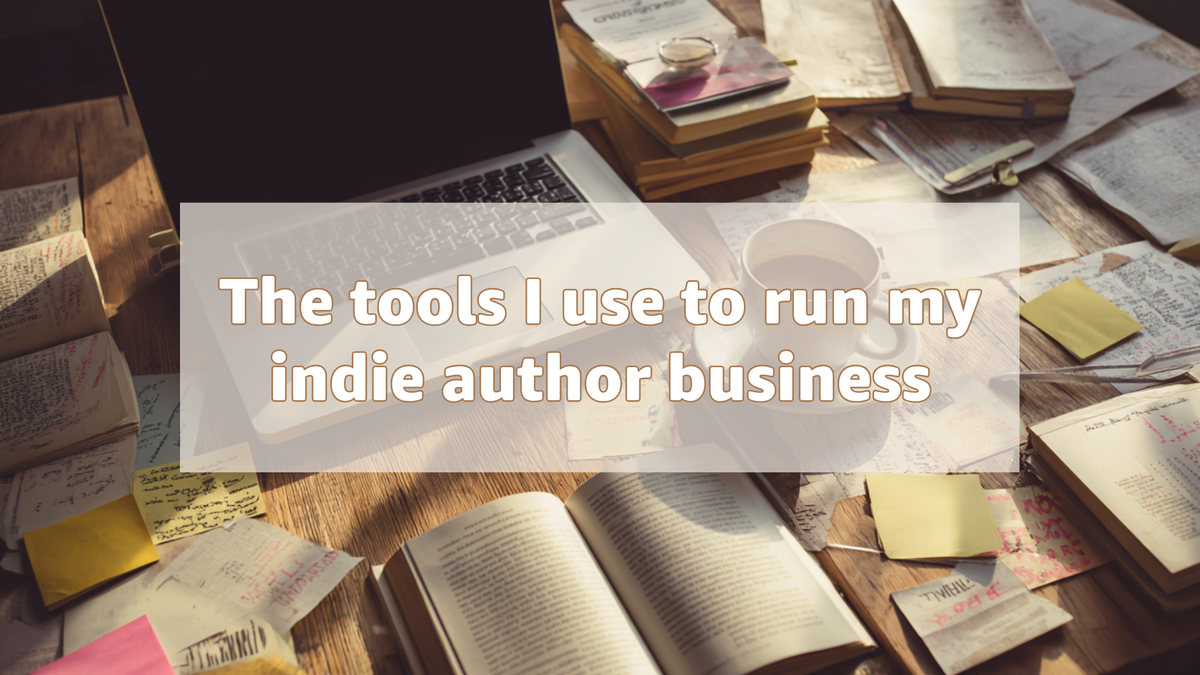
The tools I use to run my indie author business
A starter list with the full breakdown available to paid subscribers.

Most people who start writing a book have no idea they’re also starting a business.
That’s not a criticism. It’s just not something anyone tells you. You finish the manuscript, you format it, you upload it to Amazon, and then you discover that the writing was actually the easy part. Running an indie author business—marketing, metadata, email lists, social media, ad campaigns, cover design, distribution—requires a whole stack of tools, and figuring out which ones are worth your time and money is a journey in itself.
Below is a snapshot of the tools and platforms I currently use. This isn’t a comprehensive review, it’s a starting point. If you want my honest take on each one, what I’d do differently, and the tools I’ve tried and abandoned along the way, that’s what paid subscribers get.
The current stack
- Airtable
- Amazon KDP
- Bookbrush
- Bookbub
- Booklinker
- Buffer
- Canva
- Claude
- ConvertKit
- Microsoft Excel
- Make
- Microsoft Word
- Midjourney
- Scrivener
- Substack
- Threads
- TikTok
- Vellum
Some of these I’d recommend without hesitation. Some I use because they’re necessary rather than because I love them. A couple have surprised me. The full breakdown, including what I actually use each tool for and whether I think it’s worth the investment, is available to paid subscribers.
If you’re just starting out, don’t feel like you need all of this on day one. You don’t. But knowing what’s coming helps you make better decisions earlier.
Why subscribe to Indie Author Notes?
Subscribe free to get regular dispatches from The Journey, Craft or The Business. Or go paid for the full picture, the unfiltered account of what building an indie author business actually looks like. Plus access to any templates or resources in the Resources section.